
Lightning protection is crucial for keeping both valuable structures and equipment safe. Over the years, the Franklin lightning rod has been a popular solution, but more modern technologies, such as the CMCE, are gaining ground. In this comparison, we’ll explore the differences between the two devices and help you determine which option is best for your needs.
Operating Principle
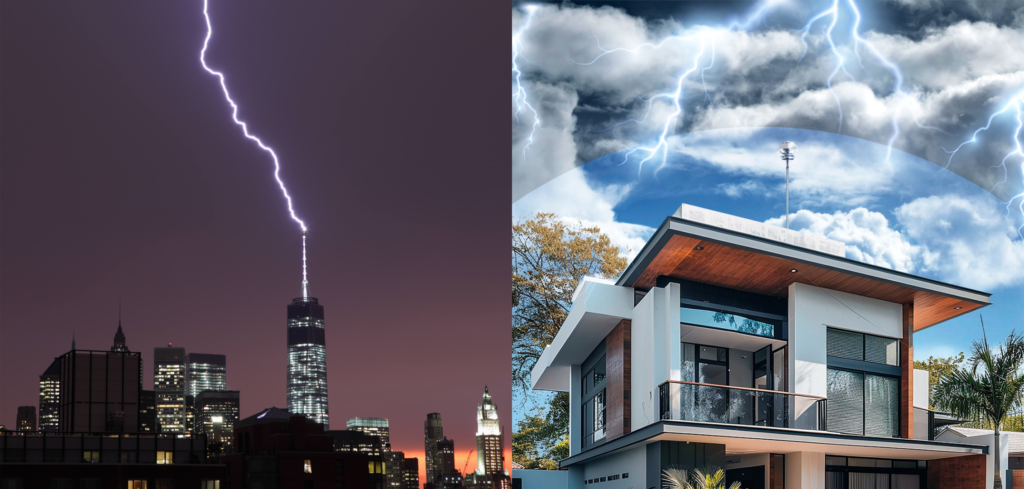
- Franklin Lightning Rod: Invented by Benjamin Franklin in the 18th century, this device attracts lightning using a grounded metal rod. When it intercepts a lightning strike, the rod directs the electrical discharge toward the ground, protecting the structure, but generating a high-voltage pulse that can damage nearby sensitive equipment.
- CMCE (Multiple Electric Field Compensator): The CMCE operates differently, preventing lightning from forming in the first place. This device deionizes the surrounding environment, neutralizing the electric field that generates lightning. By not attracting lightning, the CMCE eliminates the possibility of surges occurring in the facility, reducing the risk of damage to electrical equipment.
Risk of Power Surge
- Franklin Lightning Rod: Although effective at intercepting lightning strikes, the transfer of an electrical discharge to ground can cause high voltage spikes in the electrical grid. These spikes can result in costly damage to sensitive electronic equipment and increase the risk of fires.
- CMCE: One of the most notable advantages of the CMCE is that it does not generate high voltage spikes. By preventing lightning from forming, the CMCE avoids any risks associated with surges, offering safer protection for facilities and equipment.
Effectiveness in Different Environments
- Franklin Lightning Rod: It is most effective in areas with a low density of metal structures. However, in more complex environments, multiple objects may attract lightning, which could reduce the rod’s effectiveness.
- CMCE: This device is effective in a wide variety of environments, including those with high volatility, such as chemical plants or areas with flammable materials. By not relying on lightning interception, the CMCE provides a safer solution in critical environments.
Specific Applications
- Franklin lightning rod: Ideal for simple, low-risk structures, such as residential buildings or isolated towers. However, in more critical applications, the risk of high voltage surges may be a factor to consider.
- CMCE: This device is extremely versatile and adapts to all types of environments, whether domestic, industrial, or even maritime. The CMCE Marine line offers specialized solutions for vessels, such as yachts, fishing boats, and military vessels. Furthermore, the CMCE is especially useful in situations where safety is paramount, such as industrial plants, telecommunications towers, and explosive environments. Its ability to prevent lightning strikes makes it especially suitable for areas with high electrical activity.
Conclusion
Although both devices offer lightning protection, the CMCE stands out as a superior option to the Franklin lightning rod. Its ability to prevent lightning strikes, avoid surges, and adapt to a wide range of applications makes it the best solution for protecting residential, industrial, and maritime environments. For critical installations, areas with frequent storms, or maritime applications, the CMCE is clearly the best choice to ensure comprehensive protection without the risks associated with high voltage surges that Franklin lightning rods can generate.